

By Tabitha Brasso-Ernst (Brand Engagement & Communications Coordinator) for Bachstage Pass
By the time Leslie Dala sits down at the piano for Behind the Keys this February, he will be doing so in the midst of an intense but fulfilling show run as conductor for Così fan tutte with Vancouver Opera.
Days spent shaping ensembles, balancing voices, and navigating the intricate emotional machinery of Mozart’s famed opera will momentarily give way to something far more exposed. For one evening, Dala steps away from the podium—away from orchestral forces, chorus, and large-scale works—and returns to the instrument where his musical imagination first took shape.
For Dala, the piano is where everything begins.
“As a conductor, you don’t make sound,” he says. “You’re there to coax sound out of other people, and try to find a way to guide and shape that. When you sit down at the piano, it’s different. It’s instant. It’s just you and the sound.”
Though his career spans opera, symphonic repertoire, choral masterworks, and contemporary premieres, the piano has remained both foundation and refuge—a place of exploration and joy.
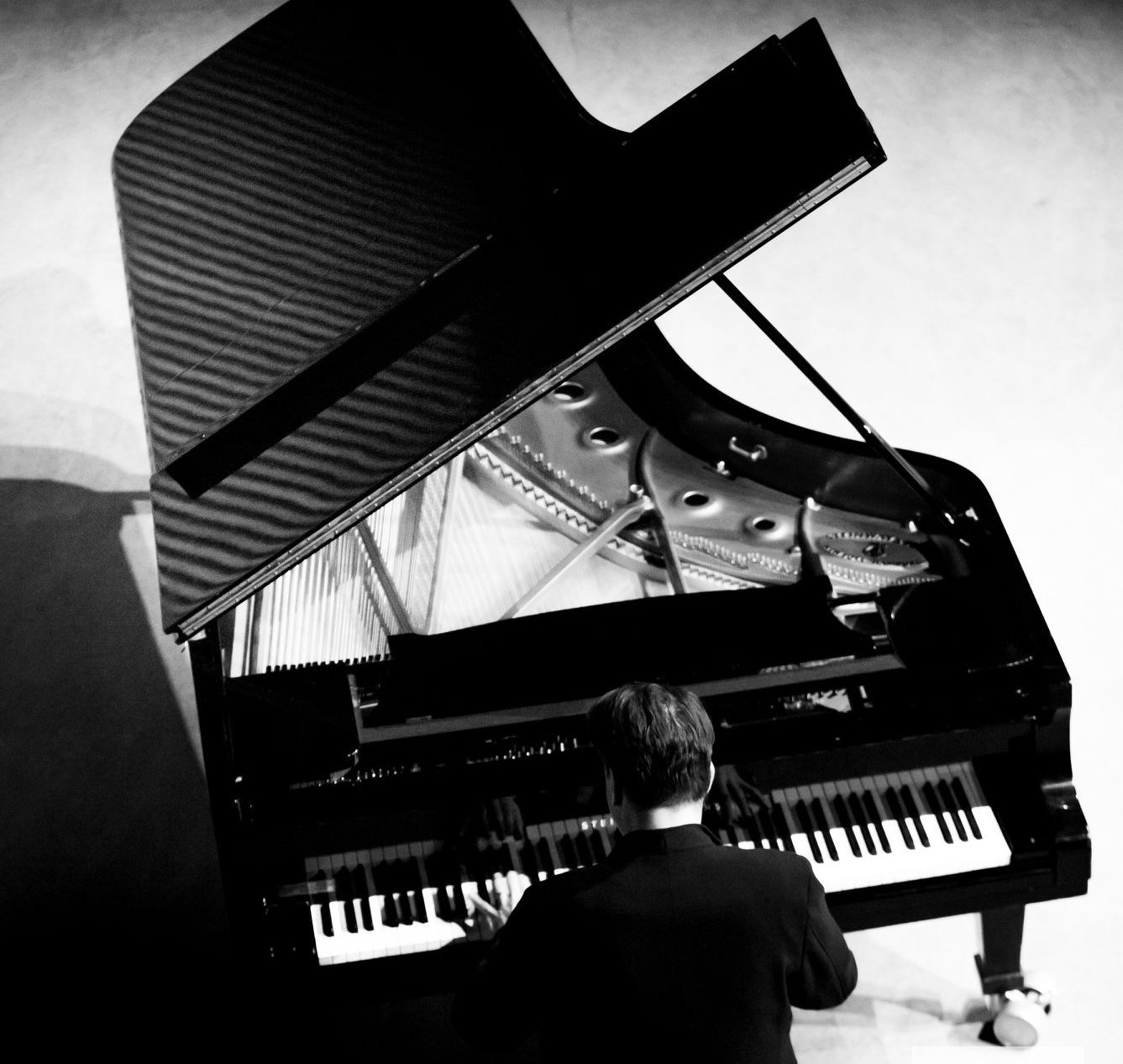
Leslie Dala at the piano. Photo courtesy of Leslie Dala and Diamond’s Edge Photography.
A Musical Upbringing Without Borders
Dala traces his wide-ranging musical life directly back to his formative years at Toronto’s St. Michael’s Choir School, where immersion—not specialization—defined the curriculum. “Every single student participated in choral singing every day,” he explains. “And it was mandatory for every student to study piano. It wasn’t an extracurricular thing. You literally left class to go to your piano lesson.”
Alongside piano came violin, organ, voice, and advanced theory—training Dala describes as highly advanced, equivalent to first-year university studies. “For me, that was just normal,” he says. “I studied piano and violin and organ and voice. Music has always felt so huge, you can spend an entire lifetime of study and work and only be scraping the surface.”
That early fluency across musical languages shaped his openness to repertoire across centuries. Bach, opera, contemporary music, orchestral works—none felt like detours.
“I sometimes think Bach alone is a universe,” he admits. “But then we live in the 21st century. I love working with living composers. We have a responsibility and a duty to promote the work of people of our own time who are brave enough to create it.”
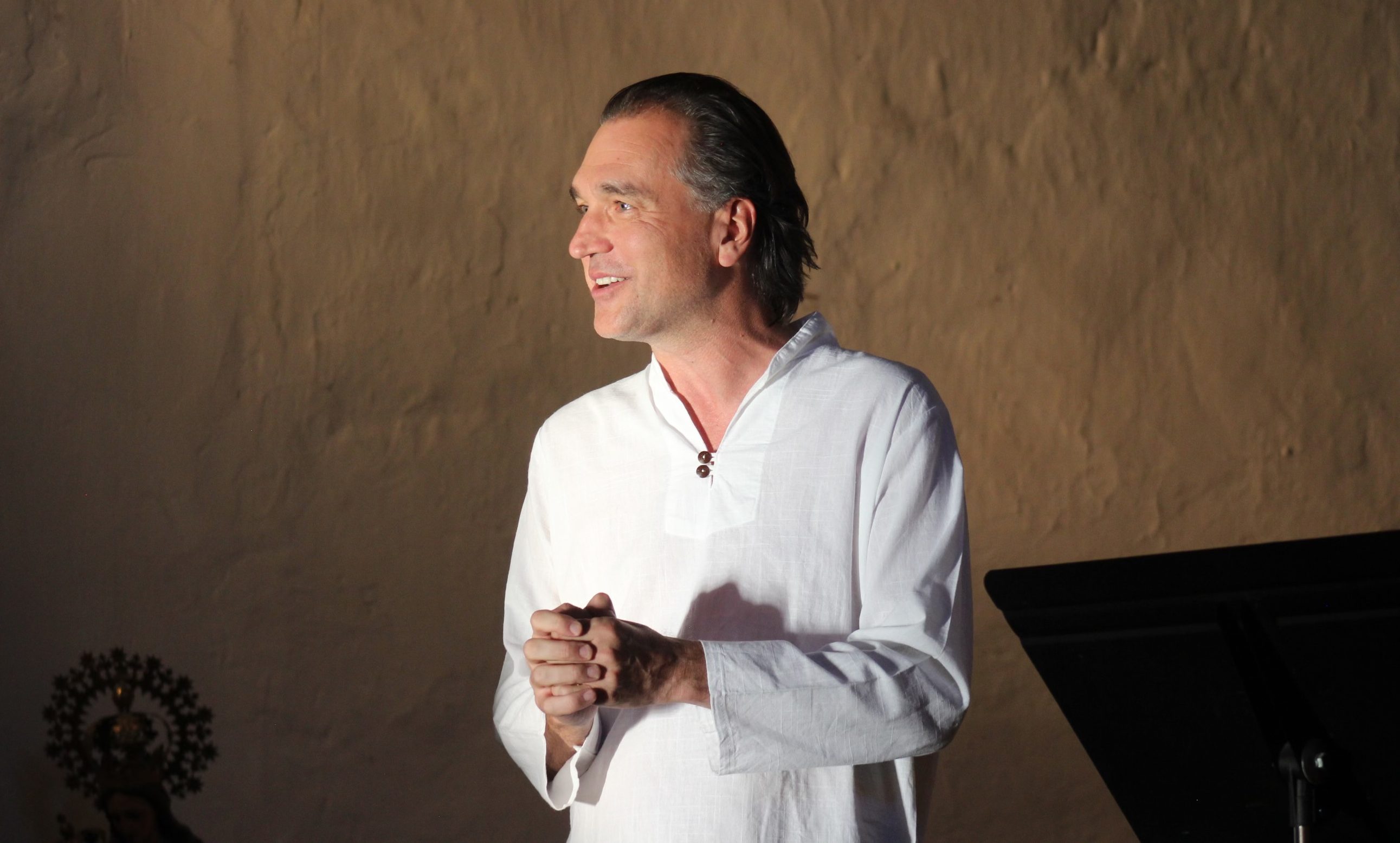
Leslie Dala in Santa Fe. Photo courtesy of Leslie Dala.
The Eternal Student
Despite decades of experience, Dala resists the idea of artistic arrival.
“I consider myself an eternal student,” he says simply. “You never stop learning.”
Whether working with choirs, orchestras, opera ensembles, or chamber musicians, he sees rehearsal rooms as places of exchange rather than hierarchy. “There’s something new in every rehearsal,” he says. “You’re always learning from the people around you.” That philosophy extends especially to collaborations with composers.
“To write something and put it out into the world takes immense courage,” Dala reflects. “Every time a composer puts something out there, they’re compared to everyone who’s ever come before them.”
The Piano Is an Orchestra
When Dala plays the piano, he doesn’t hear a single instrument. “I try to imagine the piano as something larger,” he explains. “Strings here. A woodwind line there. A brass chord. I’m always hearing more than just the keys.” The idea was instilled early by teachers—and reinforced by years on the podium.
“The piano is an orchestra,” he says. “Even though it’s a percussion instrument, you’re trying to coax something out of it that’s more than what it physically is.”
That orchestral imagination shapes his pianism, giving even solo repertoire a sense of depth and dimensionality. “In my own head, I’m always trying to hear something more three-dimensional,” he says. “That’s my way in.”

Leslie Dala at the piano. Photo courtesy of Leslie Dala and Diamond’s Edge Photography.
Behind the Keys
The Behind the Keys series pairs performance down to its essentials: performer, instrument, audience—close enough to share breath, sound, and silence.
“You really feel every person in the room,” Dala says. “It’s not abstract. People have chosen to be there together, and that creates something very special.”
While he leads large ensembles regularly, solo performance carries its own vulnerability—especially now. “I don’t have the endless hours to practice that I did when I was younger,” he admits. “So playing feels more exposed now. But I also don’t feel the need to prove anything.” What matters instead is honesty and connection.
A Program Spanning Two Centuries
This year’s Behind the Keys program spans more than 200 years of music, unified by a deeply reflective emotional core. The evening opens with Mozart’s Fantasia in C minor, a work Dala first learned as a teenager.
“It’s one of the most imaginative things Mozart ever wrote,” he says. “If you didn’t know it was by Mozart, you might think it was written decades later.” Improvisatory, dramatic, and structurally free, the piece points directly toward Romanticism. “It’s Mozart breaking down form,” Dala explains. “You can hear where the Romantics came from.”
Fantasia leads into a set of late piano miniatures by Johannes Brahms—works Dala has loved for decades but never performed publicly.
“I’ve worked on these pieces for probably thirty years,” he says. “They feel like a farewell. They’re incredibly intimate.”
Written at the same time as Ethel Smyth’s Mass in D Major (which Dala will be conducting on February 28th with the VBFC at the Orpheum), they form a quiet, personal counterpoint to the larger choral works featured elsewhere in the Vancouver Bach Choir’s season.
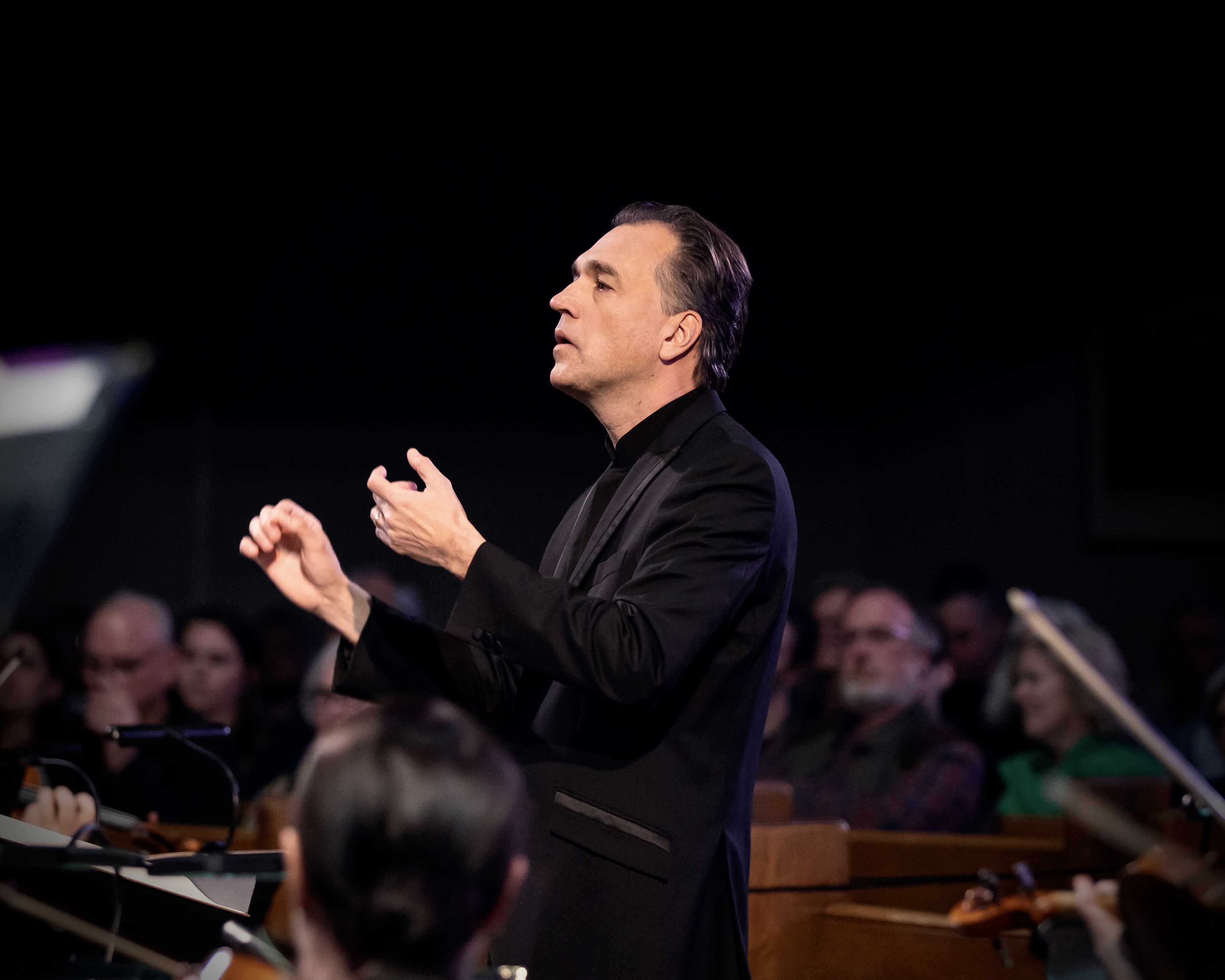
Leslie Dala at the podium. Photo courtesy of Leslie Dala.
From Brahms to Radiohead
The second half of the program takes a surprising turn: an extended set of piano transcriptions of Radiohead songs by composer and pianist Christopher O’Riley. “They’re difficult,” Dala says plainly. “But they’re beautiful.”
Discovered during the pandemic, the transcriptions became a project of love—technically demanding, emotionally rich, and unexpectedly revealing.
“There’s a mood that connects them to the Brahms,” he explains. “Reflection. Darkness. A kind of searching.”
What Lingers
Asked what he hopes audiences take away from the evening, Dala doesn’t overstate it.
“I hope that people feel they enjoyed an evening of beautiful music, and that I may have introduced classical music fans for the first time to the wonderful world of Radiohead!”
Behind the Keys offers something quiet and rare: space to listen, to reflect, and to sit with music that unfolds without haste.
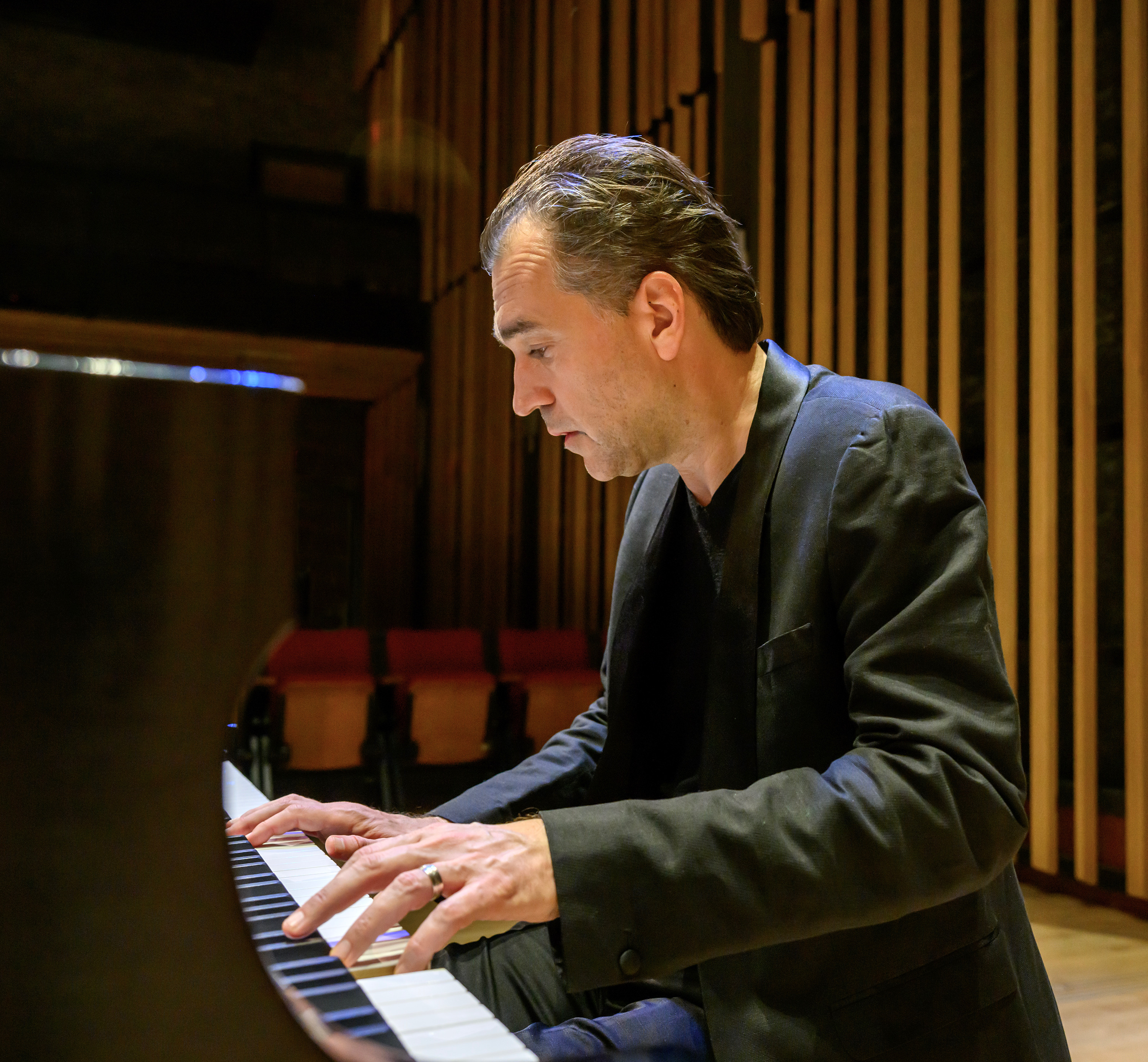
Leslie Dala at the piano. Photo courtesy of Leslie Dala.
Behind the Keys Event Details:
February 13th, 2026 at 7:30pm
The Annex (823 Seymour Street)
Dame Ethel Smyth’s Mass in D Major Event Details:
February 28th, 2026 at 7:30pm
The Orpheum (601 Smithe Street)